Cataract & lens surgery
Cataract surgery and refractive lens surgery both replace the eye’s natural lens with an artificial one. They can reduce blur and sometimes reduce the need for glasses, but results vary, risks are real, and only an in-person exam with a licensed eye surgeon can say what fits your eyes.
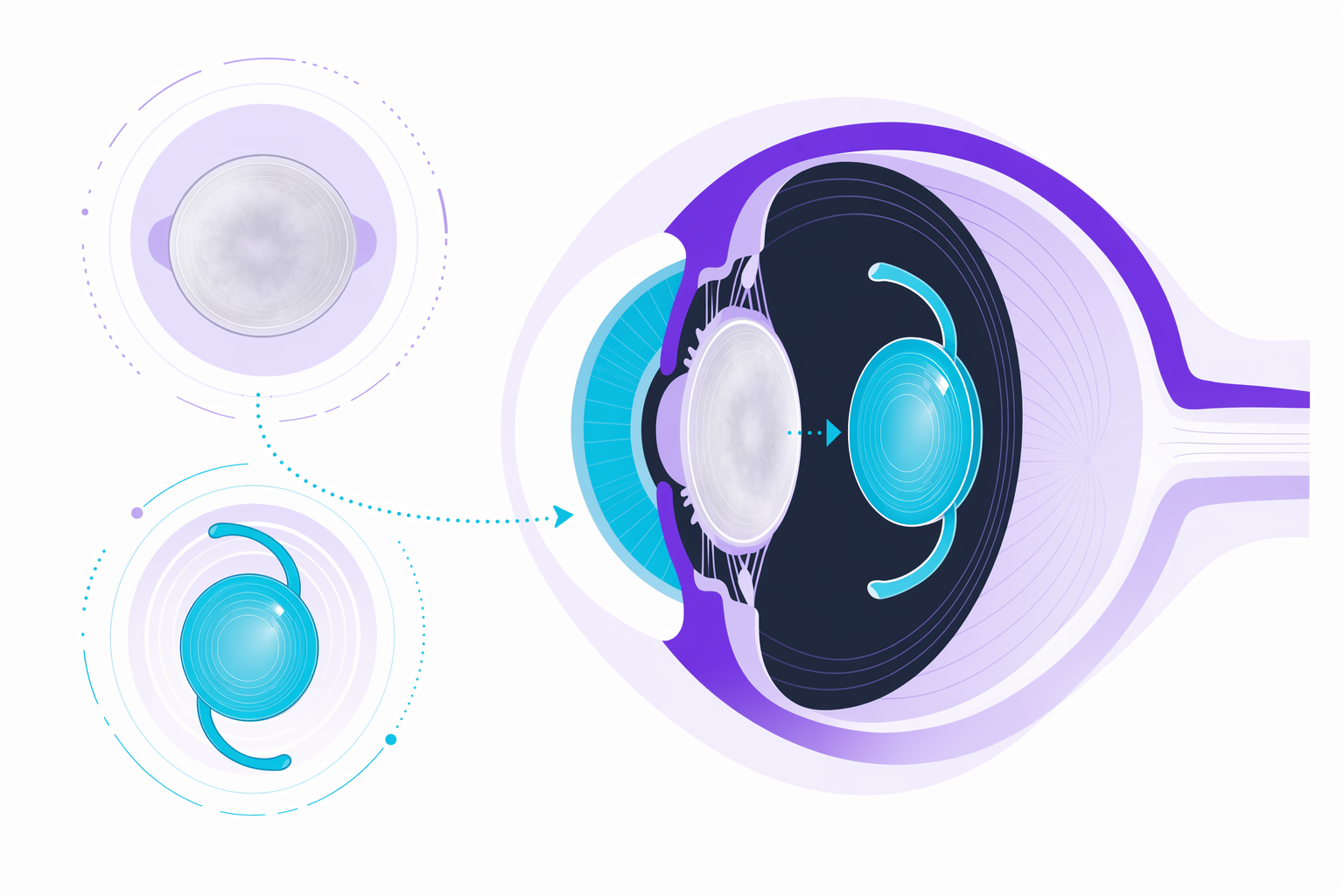
What cataract and lens surgery are
These procedures are about the lens inside your eye.
- Cataract surgery removes a cloudy natural lens and replaces it with a clear artificial lens.
- Refractive lens surgery or lens replacement removes a clear natural lens and replaces it with an artificial lens to change focus.
The operation is usually done one eye at a time, often with numbing drops and light medication to help you relax. The surgeon makes a tiny opening, removes the natural lens, and places a replacement lens in the eye.
People often hear this described as a way to see more clearly or depend less on glasses. That can happen, but it is not guaranteed. Some people still need glasses for reading, distance, or both. Lens choice matters, eye health matters, and results vary from person to person.
Sightlume is not a surgeon or clinic. We are a free matching service that helps you understand your options and connect with licensed ophthalmologists near you for a consultation. If you want that next step, you can get matched.
How it works and what changes after surgery
The key idea is simple: the surgeon replaces the eye’s natural lens with an intraocular lens, often called an IOL.
There are different lens categories. A surgeon may explain options such as:
1. Standard monofocal lenses
Usually set for one main distance, often far away. Many people still need reading glasses after surgery.
2. Lenses that try to reduce glasses dependence at more than one distance
These may help some people, but they can also come with tradeoffs such as more glare, halos, or reduced contrast in low light.
3. Lenses that correct astigmatism
These may be an option for some eyes if astigmatism is present.
What changes after surgery depends on the reason for surgery.
- With cataract surgery, the main goal is to remove the cloudy lens.
- With refractive lens surgery, the goal is usually to change focusing power and reduce dependence on glasses or contacts.
Not every eye is a good fit for every lens type. A careful surgeon should explain the likely benefits, the limits, and the downsides in plain language. If a sales pitch sounds too easy, slow down and ask more questions.
Who it may suit, and who may want a different option
Cataract surgery is commonly considered when a cataract is making daily life harder. That might mean trouble driving, reading, working, or dealing with glare at night.
Refractive lens surgery is sometimes discussed with adults who want to reduce glasses dependence and may not be ideal candidates for cornea-based procedures like LASIK, PRK, or SMILE. It is more commonly part of the conversation when people are older and the natural lens is already changing with age.
It may be worth asking about lens surgery if:
- You have cataracts or a lens problem affecting vision.
- You are tired of glasses or contacts and want to hear all options.
- You have been told you may not be a good fit for laser procedures.
- You understand this is still real eye surgery with real risks.
It may not be a good fit, or may need extra caution, if:
- Your eyes have other diseases that affect vision.
- Your prescription, cornea, or retina makes the plan more complex.
- You are mainly hoping for a perfect result with no tradeoffs.
- You are not comfortable with the risks or the recovery process.
Many people are not candidates for one procedure or another, and a trustworthy surgeon will say so. If you are comparing laser procedures too, these guides may help: LASIK basics and candidacy and exam.
Typical cost in the US
Cost depends on why you are having surgery, which lens is used, the technology involved, the surgeon, and your local area. Prices are usually discussed per eye.
Typical self-pay ranges people often see in the US are:
- Cataract surgery: often varies widely depending on the lens and testing. Basic medically necessary cataract surgery may be billed differently than premium lens upgrades.
- Refractive lens surgery / lens replacement: often around $3,000 to $5,000+ per eye in many markets, sometimes more depending on lens type and complexity.
Important cost truths:
- These are estimates, not quotes.
- Both eyes usually means roughly double the per-eye price.
- Surgery is rarely covered by insurance when the main reason is reducing glasses dependence.
- Cataract surgery may have different insurance rules if a cataract is affecting vision, but out-of-pocket costs can still apply.
- Financing may be offered by some practices, but terms vary.
The best way to compare is to ask what is included:
- Surgeon fee
- Facility fee
- Lens cost
- Testing and measurements
- Follow-up visits
- Possible enhancement or extra treatment costs
For a broader cost overview across procedures, see vision correction costs.
Recovery and what the first days can feel like
Recovery is often manageable, but it is still surgery. Many people notice clearer vision fairly soon, while others need more time for vision to settle. One eye may be done first, then the second eye later.
Common early experiences can include:
- Mild scratchiness or irritation
- Light sensitivity
- Glare or halos, especially at night
- Blurry or fluctuating vision while the eye heals
- A short period of adjusting to the new lens
You may be told to use prescription eye drops for a period of time and to avoid certain activities for a while. Exact instructions vary by surgeon and by your eye.
A few practical questions to ask at a consultation:
- When can I drive?
- When can I work on a computer?
- When can I exercise or lift heavy things?
- When can I swim or get water in my eye?
- How many follow-up visits are usual?
If you are looking at surgery mainly to reduce glasses dependence, ask how often people with your kind of eyes still need glasses afterward. That answer should be honest and specific, not a promise.
Risks and side effects to take seriously
Every eye surgery carries real risks. They are not just fine print.
Possible risks and side effects can include:
- Dry eye or eye irritation
- Glare, halos, starbursts, or trouble at night
- Under-correction or over-correction
- Remaining need for glasses or contacts
- Inflammation or swelling
- Infection
- Increased eye pressure
- Lens position problems or other procedure-specific complications
- Retinal problems in some people
- Rare but serious vision loss
Some side effects improve with time. Some do not improve as much as a person hoped. This is one reason a good exam matters so much. Your eye health, pupil size, retina, cornea, tear film, and prescription can all affect risk and likely outcome.
Do not let anyone rush you. It is always OK to ask for plain-language explanations, get a second opinion, or decide to wait. You can also read more about surgical downsides in LASIK risks and side effects as a general example of why honest risk discussions matter across vision-correction surgery.
What to ask at your consultation
A consultation should help you understand whether surgery makes sense for you, not push you into booking fast.
Bring a short list and ask direct questions:
- Why are you recommending this procedure for my eyes?
- What are the realistic benefits for me, and what might still require glasses?
- What lens options do I have, and what are the tradeoffs of each?
- What are the main risks in my case?
- What happens if I am unhappy with glare, halos, or my vision afterward?
- What is the full cost per eye, and what is not included?
- Who does the surgery and who handles follow-up care?
- Am I a reasonable candidate, or do you think I should wait or choose a different option?
A strong consultation should leave you feeling informed, not pressured.
Sightlume can help you compare consultations with licensed ophthalmologists near you, in your preferred language, at no cost to you. You choose who to speak with and who to trust. Start here: free matching or learn how to compare doctors in how to choose an eye surgeon.
Important: this page is general educational information, not medical advice. Sightlume does not diagnose, examine eyes, or recommend surgery for any individual. Only a licensed eye surgeon, after an in-person exam, can tell you whether you are a candidate and what risks and options apply to your eyes.
Cataract and lens surgery replace the eye’s natural lens. They may help some people see more clearly or rely less on glasses, but they are still real surgeries with real risks, and some people are not good candidates. Compare consultations, ask blunt questions about risks and full cost, and remember that only an in-person exam with a licensed eye surgeon can tell you what fits your eyes.