ICL (implantable lens)
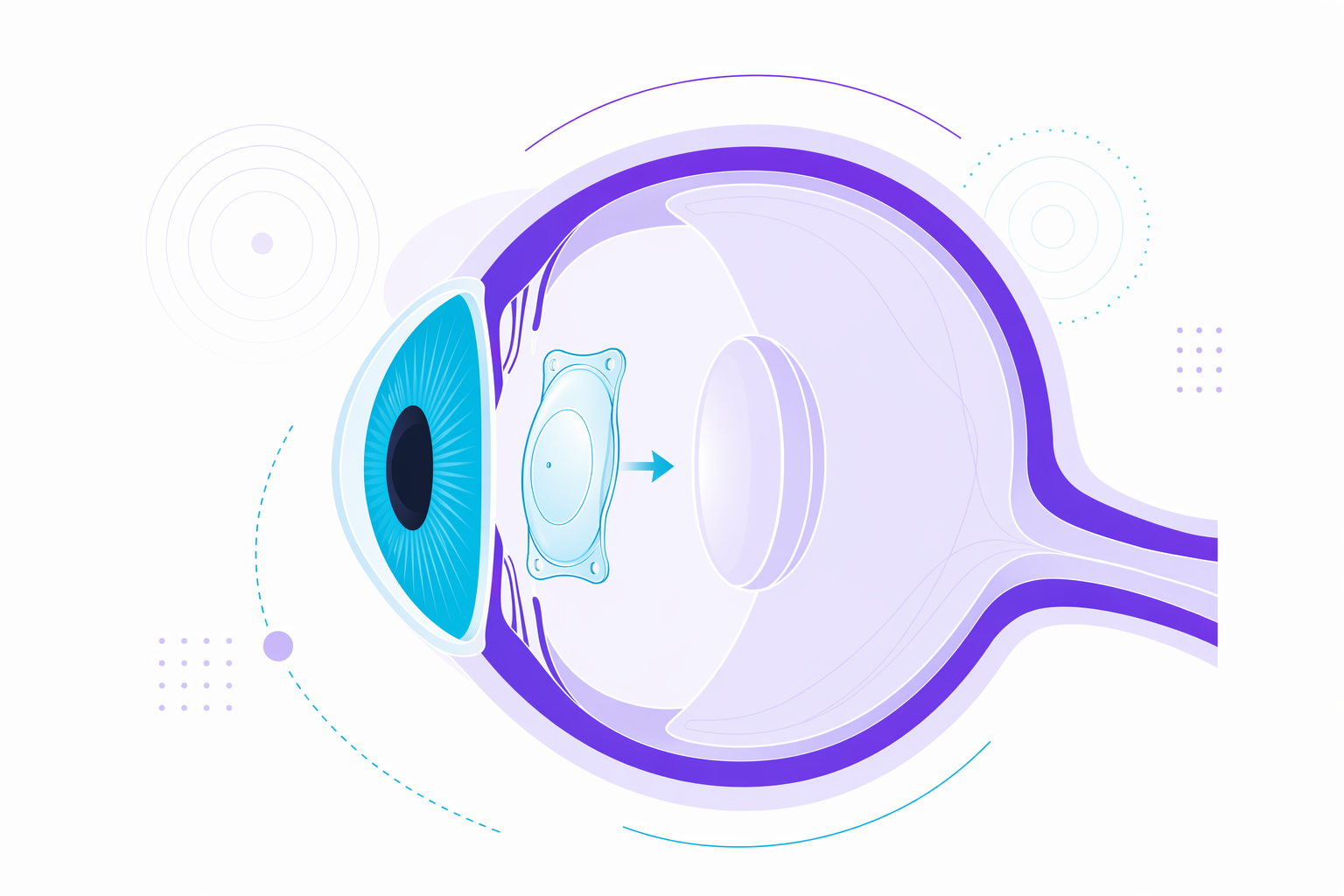
ICL is a vision-correction surgery that places a small lens inside the eye, behind the iris and in front of your natural lens. It can be a good option for some people, but it is not right for everyone, and only a licensed eye surgeon can tell after an in-person exam.
What ICL is and why some people look into it
ICL usually means an implantable lens placed inside the eye to help correct nearsightedness, and sometimes astigmatism depending on the case and lens type. Unlike LASIK, PRK, or SMILE, ICL does not reshape the cornea with a laser. Instead, the surgeon places a thin synthetic lens inside the eye while your natural lens stays in place.
People often ask about ICL when they:
- have moderate to high nearsightedness
- have thin corneas or other corneal factors that may make laser surgery less suitable
- want to understand an option that does not remove corneal tissue
- have been told they may not be a candidate for LASIK or PRK
That does not mean ICL is better for everyone. Some people are not candidates for ICL either. The right choice depends on your eye health, prescription stability, corneal measurements, pupil size, age, and other findings from an exam. You can learn about how candidacy is checked on our candidacy and exam page.
How ICL surgery works
Here is the simple version:
- Before surgery, the surgeon measures your eyes carefully. This helps them decide whether ICL is even an option and what lens size and power may fit.
- On surgery day, numbing drops are usually used. The surgeon makes a small opening in the eye.
- The lens is folded, inserted through that opening, and positioned behind the colored part of the eye and in front of the natural lens.
- The surgeon checks the lens position and eye pressure.
The goal is to improve how light focuses on the retina. Results vary from person to person. Some people still need glasses for certain tasks even after surgery.
One reason people ask about ICL is that the lens can often be removed or exchanged later if needed. But that does not make it a casual choice. It is still eye surgery, with real risks and real tradeoffs.
If you are comparing options, it may help to read about LASIK and PRK too, because different procedures fit different eyes.
Who ICL may suit — and who may be told no
ICL may be discussed for adults with stable vision who want to reduce their need for glasses or contacts, especially when they are not strong candidates for corneal laser surgery. But candidacy is very specific.
A surgeon may look at things like:
- your prescription and whether it has been stable
- the depth and shape of the front part of your eye
- corneal thickness and overall corneal health
- eye pressure
- the health of your retina and natural lens
- whether you already have cataracts or other eye disease
Reasons someone may not be a good candidate can include:
- certain eye anatomy measurements
- uncontrolled dry eye or other surface problems that still need treatment
- glaucoma or pressure concerns
- cataracts or lens changes
- retinal problems
- pregnancy or times when vision may be changing
- unrealistic expectations about results
An honest surgeon will sometimes say no. That is a good sign, not a bad one. If you are still figuring out whether any refractive surgery may fit you, our guide on are you a candidate for LASIK? can help you understand the broader screening questions. It is still general information, not medical advice.
Typical ICL cost in the US
ICL is usually one of the more expensive vision-correction procedures.
Typical range: about $3,000 to $5,000 per eye in the US. For both eyes, that is often roughly $6,000 to $10,000 total.
That is an estimate, not a quote. The real price depends on:
- whether one or both eyes are treated
- your prescription and surgical complexity
- testing and follow-up included by the practice
- the surgeon's experience and local market
- the technology used
A few important money points:
- Vision-correction surgery is rarely covered by insurance.
- Some practices offer payment plans or financing, but terms vary.
- The cheapest ad is not always the best value. Ask what is included and what costs extra.
Use our costs page to compare realistic ranges before you book consultations. Sightlume is a free matching service. We do not perform surgery, give quotes, or tell you which procedure you should have.
Recovery and what the first days can feel like
Recovery after ICL is often fairly quick, but quick does not mean risk-free or the same for everyone.
Many people are able to return to normal light activities within a short time, but your surgeon may ask you to avoid rubbing your eyes, swimming, heavy exercise, or getting water in the eyes for a period. You will usually need follow-up visits so the surgeon can check healing and eye pressure.
Common short-term experiences can include:
- blurry or fluctuating vision at first
- light sensitivity
- scratchy or irritated feeling
- redness
- glare or halos, especially at night
Your surgeon may prescribe eye drops and give very specific aftercare instructions. It is important to follow them closely.
Do not assume recovery means your final vision is set on day one. Healing takes time. Some people are happy quickly. Others need more time, more visits, or further discussion about remaining prescription. Only your treating surgeon can tell you what is normal for your eye after surgery.
Real risks and side effects to take seriously
Every eye surgery has risks. ICL is no exception. If a website talks only about benefits, that is not the full picture.
Possible risks and side effects can include:
- dry eye symptoms or irritation
- glare, halos, starbursts, or night-vision problems
- under-correction or over-correction, meaning you may still need glasses or contacts for some tasks
- high eye pressure or pressure spikes
- infection
- inflammation
- cataract formation or earlier lens changes in some cases
- lens rotation, sizing, or positioning problems that may need another procedure
- corneal cell loss over time in some patients
- rare but serious vision loss
Some of these risks are uncommon, but they are real. Results vary from person to person. No ethical surgeon can promise perfect vision, freedom from glasses forever, or zero risk.
If you want a broader list of questions to think about before any refractive procedure, read LASIK risks and side effects. Many risk themes overlap across vision-correction surgery, even though the procedures differ.
What to ask at your consultation
A consultation is your chance to slow down and get clear answers. You are not committing to surgery by asking questions.
Bring a list like this:
- Am I a candidate for ICL, and why or why not?
- What are my other options besides ICL?
- What risks matter most for my eyes specifically?
- What results are realistic for my prescription? Might I still need glasses?
- What is the full price, and what is included?
- How many follow-up visits are included?
- What symptoms after surgery would be urgent?
- If the result is not what we hoped, what happens next?
It is smart to compare more than one consultation. You choose who to trust, and it is always OK to wait or to keep wearing glasses or contacts. If you want help finding licensed eye surgeons near you for a consultation, you can get matched for free.
Important: Sightlume is not a medical provider. This page is general educational information, not medical advice. Only a licensed eye surgeon, after an in-person exam, can tell you whether ICL or any other procedure is appropriate for you.
ICL is an inside-the-eye lens surgery that may help some people who are not good candidates for laser vision correction, but it is not for everyone. Learn the costs and risks, compare consultations, and remember: only an in-person exam with a licensed eye surgeon can decide candidacy.